Lovely acoustic version of one of my favourite songs from Josh Ritter’s splendid new album The Beast In Its Tracks.
Read my review of the album here:

Lovely acoustic version of one of my favourite songs from Josh Ritter’s splendid new album The Beast In Its Tracks.
Read my review of the album here:
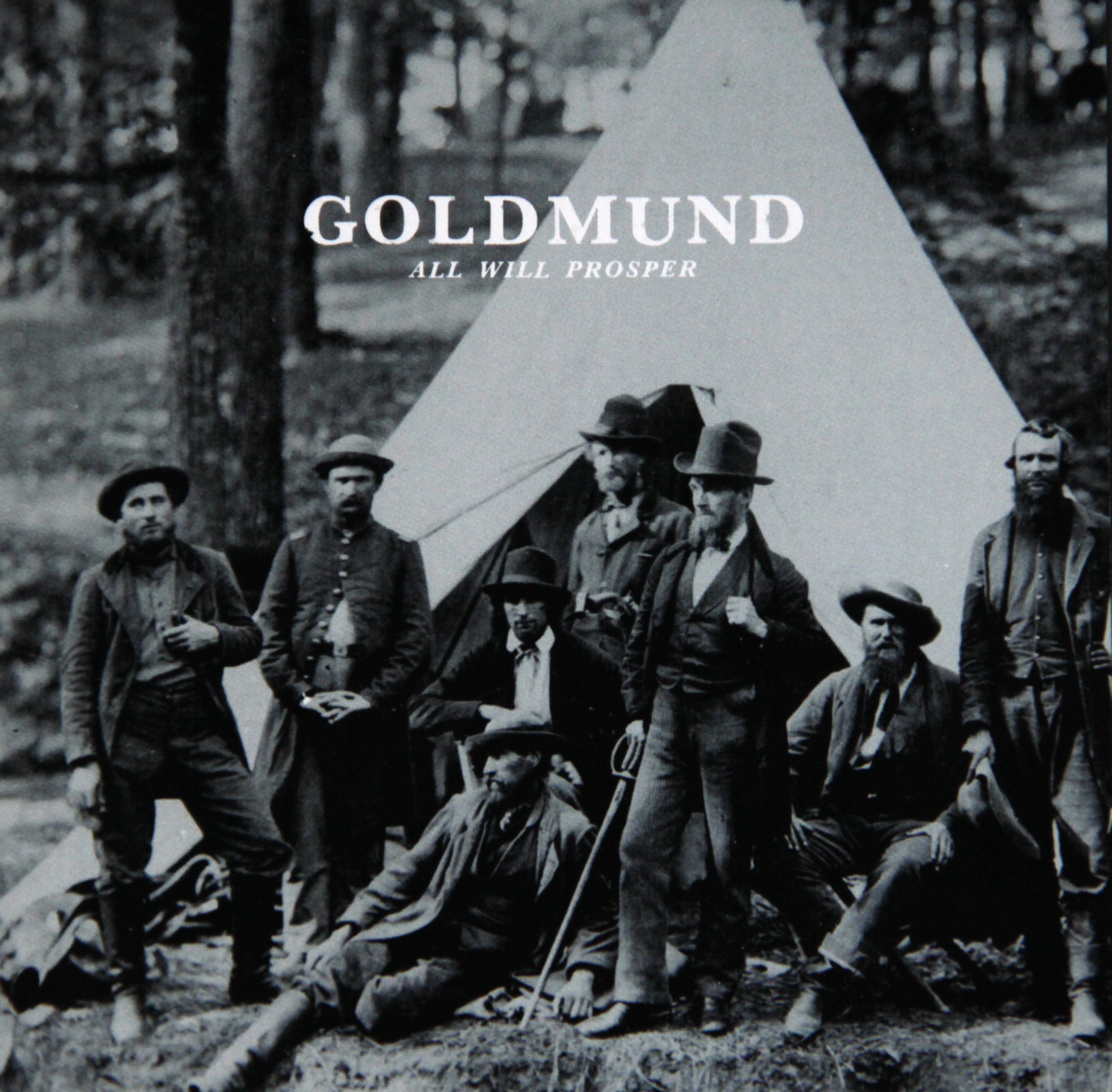
Goldmund : All Will Prosper
(2011 Western Vinyl)
Keith Kenniff aka Goldmund aka Helios is an artist whose work wouldn’t normally fit into the concept of this blog very well. His albums as Helios are firmly rooted in dreamy Electric-Ambient-Pop territory and his Goldmund output consisting mainly of minimal piano/modern classical work.
All Will Prosper, on the other hand, is an album of 14 traditional Folk songs from the American Civil War era, plus the Jay Ungar composition Ashoken Farewell (which I am fortunate enough to be aware of from the ‘Ashokan Farewell/Beautiful Dreamer Songs Of Stephen Foster’-CD), and does tie in with the things I want to cover on here perfectly.
What we get are well-known songs such as Amazing Grace, Dixie, Johnny Has Gone For A Soldier and All Quiet on the Potomac. I hadn’t heard a few of the others before – but that is perhaps not all that surprising, given I am from Europe, so these are understandably not as familiar to my ears as they might be to yours (if you are from the US that is). Or maybe you are sick to death of them, as you had to learn them at school and haven’t listend to them for ages. However, even if that should be the case or you plain have forgotten how they sound – on here they most probably sound very different from the way you know them. Not a terrible lot to be said about them either – almost all of them are slow to very slow, all of them instrumental, and with the exception of Dixie on which Keith Kenniff is supported by his brother (I believe) on an upright bass, arranged only with Piano and/or Acoustic guitar. The piano has been recorded with the piano top open and you can hear pedals being pushed and his fingers scratching on the guitar strings as the microphones were placed very close to the guitar.
All songs are very short, (the 15 songs on All Will Prosper only amount to a total playing time of under 34 minutes) and most of them sound a bit alike, at only cursory listen you hardly even notice the end of one and the beginning of the next track. On most other albums this fact could probably be described as something of a weakness, but on here it works very well and is only adding to the reflective, slightly melancholic and utterly peaceful, calming atmosphere throughout the whole album.
I was surprised to hear Barbara Allen on here as I was only aware of that song from the Alasdair Roberts version, a quick internet search revealed that its roots do indeed lie in the British Isles, but it quickly became a standard in the US as well.
Quite impossible (and unnecessary) to pick highlights, but if I had to choose one, it would probably be Amazing Grace – even I have heard this so many times before, it’s hard to be moved by it, but this almost slowed down to a standstill version is nothing but – amazing.
The album also works very well for me as I perfect accompaniment for the book I am currently reading – a biography of Abraham Lincoln.

Josh Ritter : Golden Age Of Radio
(2001, re-released 2009)
To be honest, I lumped Josh Ritter together with certain surfer-dude types populating the music scene in the mid 2000’s (can’t even remember their names) for a few years and didn’t take the time to find out how he actually sounds – until about the year 2010. And it took me until a few weeks ago to finally check out this, his second album.
Golden Age Of Radio was originally released in 2001, in hindsight I call myself lucky that I didn’t buy it until now, as I now own the 2-CD reissue version that on the bonus disc features the whole album played by him solo and acoustic in 2008 in Nashville, as well as a few extra-tracks such as an original demo version (also acoustic) entitled A Country Song which is actually the title track on the original album. Also featured is a nice, but somewhat unremarkable Don’t Wake Up Juniper (it’s a b-side after all) and two Jackdrag remixes (of Come & Find Me and Other Side) plus two quicktime videos I haven’t watched yet.
Some of the acoustic solo versions also show how much better Josh has become as a musician and a singer (listen to album opener Come And Find Me and Me & Jiggs and you’ll know what I am talking about), in the intervening years. But it could just be my proclivity for acoustic music as well – I love stripped-down, basic versions very much (as you will undoubtedly be able to see reflected in future posts on here). Which leads me to my main point of criticism of the original album, as fine as it is. It just shows all too clearly (starting with the booklet photos and the layout) that this is an early effort, and shows him often slightly awkward when it comes to his singing style and a number of tracks suffer from a peculiar slowness which doesn’t become them at all, possibly showing a band unsure yet of themselves. That’s especially the case with Roll On, Me & Jiggs and Harrisburg. All three tracks are recorded in much better versions on the acoustic bonus CD and, especially Harrisburg (minus the slightly annoying Wicked Game/audience interaction bit), on the very fine Live At Iveagh Gardens album (recorded in 2010 in Dublin). The newer versions of those tracks just sound faster, more energetic and just plain better than they do on here. Which is a bit of a shame, as all of them are excellent songs – Me & Jiggs for example, which is probably based on his own experiences in his youth (‘… sitting on a porch, singing Townes Van Zandt…’). Or Roll On – one of his best songs, sounding brilliant and a highlight for me on Live At…, on here it’s quite slow and the vocals aren’t that good.
All of this sounds quite negative, I just realized, but it’s not really meant to be – it is still a very good album: Absolutely fabulous (in both versions) is Leaving, a simple, folky acoustic tune (plus a bit of electric solo guitar). Other Side and Drive Away both remind me in sound/tempo and arrangement of a fairly typical Emo-influenced band (not the screaming kind) on the Polyvinyl label (American Football/Owen for example) – not surprising (and nothing to be ashamed of either!) perhaps given that these songs were probably written in the late 1990’s/early 2000’s – but these influences are long gone and nowhere to be found on his newer releases. Other Side is a lovely song too (particularly the acoustic version), the lyrics a good indication of where Josh Ritter hails from (Moscow, Idaho) – ‘… from the Northwest Passage to the Great Divide – Everybody’s looking for the other side…’.
I like Anne a lot too (again, both versions), especially the lead guitar part (on the original one) – the arrangement and vocals a bit rough hewn for sure, but as a composition it’s already pretty good indeed. Harrisburg has fast become a Josh Ritter fave of mine. As I said, the version on Live At Iveagh … is much better than the one on here, but what’s the same is a certain Southern (Rock) quality of the tune and the immortal lines ‘… and if evil exists it’s a pair of train tracks and the devil is a railroad car…’. You just have to love a song with that line in it, don’t you?
The best song by a long mile for me is Golden Age… – a surefire hit (not in the chart-topping sense, but quality-wise): The slow, acoustic one on the bonus CD isn’t bad at all, but even better is the original version, more up-tempo, nicely arranged and a certain hymn-like sensibility to it, and very fine, anthemic lyrics. Reminds me a bit of early Frames (who Josh Ritter was/is friends with) too. Definitely one of the very best songs he’s ever written and recorded.
Album closer Song For The Fireflies strays into dream-pop territory (and is better than the acoustic version, for a change).
As I mentioned above, Golden Age Of Radio could be described as merely being a pointer towards bigger, better things to come, but to do so and shrug it off as that would be a loss – the things making Josh Ritter as good as he is nowadays are already there. And you would, as I did for quite some time, miss out on hearing a quite a few brilliant songs.
He’s got some fabulous tour posters as well – see the store at http://www.joshritter.com
I have heard this song in quite a few different versions in the past 30 years (oh boy), but this is one of the best, this band he’s been touring with for the past few years is bloody brilliant (and his brother Phil too).
Trust me, you will hear (a lot) more from and about Dave Alvin on Backroad Bound in the future.
In the meantime, enjoy!
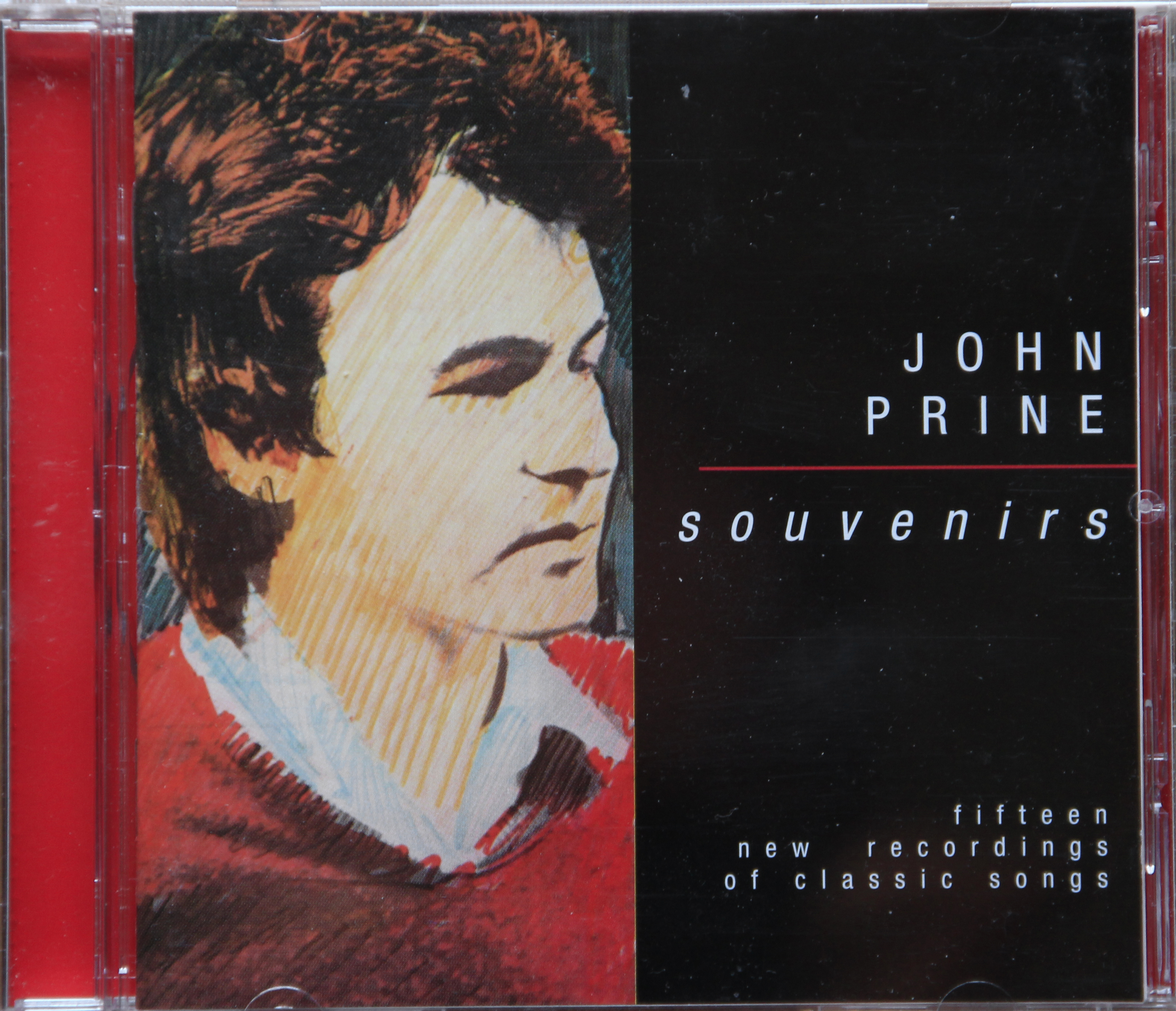
John Prine : Souvenirs
(2000, Oh Boy Records)
‘Fifteen new recordings of classic songs’ – that’s what the front cover states, so far, so good. What it doesn’t say is how excellent these new versions are.
Recorded in ‘Cowboy’ Jack Clement’s The Cowboy Arms Hotel & Recording Spa in Nashville the sound is excellent. What we get is mainly John Prine and his finger-picked acoustic guitar at his best, augmented by a select cast of uniformly accomplished musicians (just listen to Angel from Montgomery) on the usual instruments in that Singer-Songwriter/Folk/Country context (electric guitars, bass, mandolin, fiddle and accordion and so on). All very well and nice to have, but that wouldn’t count for much, wouldn’t he write such damn good songs. I don’t own all of his records (yet) so I can’t say which songs he left out I would have loved to have on here as well – apart from one and that is Daddy’s Little Pumpkin (from The Missing Years), given that that version is already so perfect maybe it’s better it isn’t done here again. As far as I’m aware, it’s note one of his most popular songs, but it is my favorite.
The album starts with Souvenirs (from Diamonds in the Rough), setting the course of the album nicely, his gravelly voice, a lovely acoustic guitar only backed by an electric guitar and a little bit of bass and mandolin – the sound as pure and clear as a fine winter morning. Next song Fish And Whistle (from his 1978 album Bruised Orange) features some fine accordion backing, and is one of the more Country-influenced songs on Souvenirs (together with Grandpa Was A Carpenter and Please Don’t Bury Me).
Far From Me (from the first, self titled album) which was also recorded by Justin Townes Earle on Broken Hearts And Dirty Windows in a mighty fine version, but the version on here is far more melancholic, which suites the lyrics of the theme better. It’s about a couple going through something of a rough patch (‘…. Well. Ya know, she still laughs with me But she waits just a second too long…’), but the way the song is set (with him picking her, a waitress, up at the end of her shift) is one of the best examples of Prine’s songwriting capabilities – it just begs to be given a cinematic treatment, at least I can imagine a short film/music video version perfectly well. Next track Angel From Montgomery, which I was familiar with from a radically different, but excellent version by Canadian outfit The Leslie Spit Treeo (anybody remember then?), is a slow ballad, augmented by the lovely interplay between pedal steel guitar and mandolin.
The following Donald & Lydia is another prime example of why Prine is regarded so highly as a songwriter, the lyrics mirroring American small-town life perfectly, it’s about a would-be couple that tragically never meet in real life although they only live a few miles apart and are both dreaming about finding love (‘They made love in the mountains They made love in the streams They made love in the valleys They made love in their dreams But when they were finished there was nothing to say ‘cause mostly they made love from ten miles away’) – how touching is that?
Grandpa Was A Carpenter is an old-timey Country tune with a prominent fiddle and suitably rustic, old-style lyrics (‘Well he used to sing me ‘Blood On the Saddle’ And rock me on his knee And let me listen to the radio Before we got T.V. Well, he’s drive to church on Sundays And he’d take me with him too Stained glass in every window Hearing aids in every pew…’) – proving that he can do both sad, melancholic and upbeat, good-natured songs equally well.
The Late John Garfield Blues is another highlight for me – slow, quite melancholic and with a lovely tune, one of his finest songs if you ask me.
But it’s next song Blue Umbrella, which I probably love best on here – just John Prine, his voice and a picked acoustic guitar – actually pretty much the only things he needs to sing his songs write into my heart.
Six O’Clock News is one of the saddest songs on here, telling the sad story (‘… The Whole town saw Jimmy On the six o’clock news His brains were on the sidewalk And Blood Was on his shoes…’) of young James Lewis, son of Wanda, and it’s also one of the loveliest arranged one, I very much like the interplay between the electric lead guitar, accordion and piano.
Well, what’s to say about Sam Stone? Another, and probably, if I am informed correctly, one of his best known songs (covered by the likes of Johnny Cash) about a war veteran (most probably from the Vietnam war), coming home with military accolades, but also an addiction to morphine which ends with his overdose – not very surprising it was/is so popular in the US, very sad indeed – I am especially moved by the line (‘… While the kids ran around wearing other People’s clothes…’), a great song, that.
Next to last song Please Don’t Bury me is another slightly faster and good-natured song with a ueber-catchy chorus. I have to admit that I actually like the version on his first album of album closer Hello In There a tad better – an excellent song and the lyrics are a very good example of his maturity in both outlook on life and as a songwriter, even at an early stage in his career (he was only in his mid-twenties when that album was released in 1971).
A lot of catching up for me left to do I guess, when it comes to his work, as I only own this album, The Missing Years and the first album so far.

Son Volt : Honky Tonk
2013 Rounder Records
Son Volt and me go back a long time. I have been listening to their records since their first album Trace came out back in 1995. But I have to admit that I stopped listening to their new records after Wide Swing Tremolo. The excellent compilation
A Retrospective 1995 – 2000 rekindled my love for their music when it was released in 2005, but I didn’t buy their next records Okemah And The Melody Of Riot and The Search. The first new record in which Jay Farrar was involved with after that time I bought was his collaboration with Death Cab For Cutie’s Benjamin Gibbard on the Jack Kerouac-themed One Fast Move Or I’m Gone, (which is a fantastic record and which I will be writing about on here at some point in the future). I meant to buy the 2009 album Central American Dust, but didn’t manage to do so far, so that is still on my to-buy list.
After hearing only good things about Honky Tonk I bought it – and I don’t regret doing so. The first question coming to mind is: Is this still Alt.Country? As the title implies, it is leaning pretty far towards old-school Country more than the contemporary Alternative Country style Jay Farrar helped to create and define with Uncle Tupelo and Son Volt over the past 20 years or so.
There’s even a song on here called Bakersfield which sounds exactly as you would expect, it’s the most Country-Rocking song on the album and probably wouldn’t sound at all out of place in a Honky-Tonk bar in, well, Bakersfield. Even the lyrics such as ‘… there’s more brick walls than bridges on the way to your heart…’ could probably be found on songs played on mainstream Country radio stations – a far cry from the lyrics of early Uncle Tupelo recordings such as Still Feel Gone or March 16-20, 1992. Gone are the occasional harder rocking songs found on the early Son Volt albums (such as Route from Trace or Straightface from Wide Swing Tremolo). Mark Spencer’s pedal steel guitar is all over the place on the album and the songs are mainly slow to mid-tempo (and quite short, some of them are barely over 2 minutes long), but I like the slowed down ones best, which make the pedal steel guitar sounds exactly as I like it – I always loved their sound, not so much because they are a staple in Country music, but for their otherworldly, dreamy sound characteristic. Especially good are Angel of the Blues and Down The Highway which both fall into this category. In addition, Angel Of the Blues is probably one of the best songs he’s ever written, although the arrangement does play a big part in making the song as good as it is – the pedal steel guitar is the most prominent instrument you hear, the song very slowed-down, full of melancholic longing, a heavenly, if dusty, ode to the American heartland of which the band clearly is a child. Wild Side and Livin’ On (the latter featuring a lovely Accordion) are both other fine examples of Farrar’s knack for writing slow, dreamy songs immediately driving a hook in your heart (mine at least), such as Too Early or Tear Stained Eye (both from Trace), always the reason I loved Son Volt records so much.
The fiddle on Down The Highway actually sounds more Celtic than American (which is of course not all that surprising), contributing to making the song another highlight of the album for me, the eternal hope of finding better things (love in this case), somewhere far away – down the highway. The super-catchyTears of Change, Seawall with its dueling fiddle and pedal steel guitar providing the instrumental flourishes, and Barricades with a number of changes in speed are more of the good stuff, but it is album closer Shine On with some unusual sound effects and slightly dragging drums, providing a bit of sonic variety, perhaps lacking on most other tracks of Honky Tonk. So I am holding my breath how the next Son Volt album will sound.
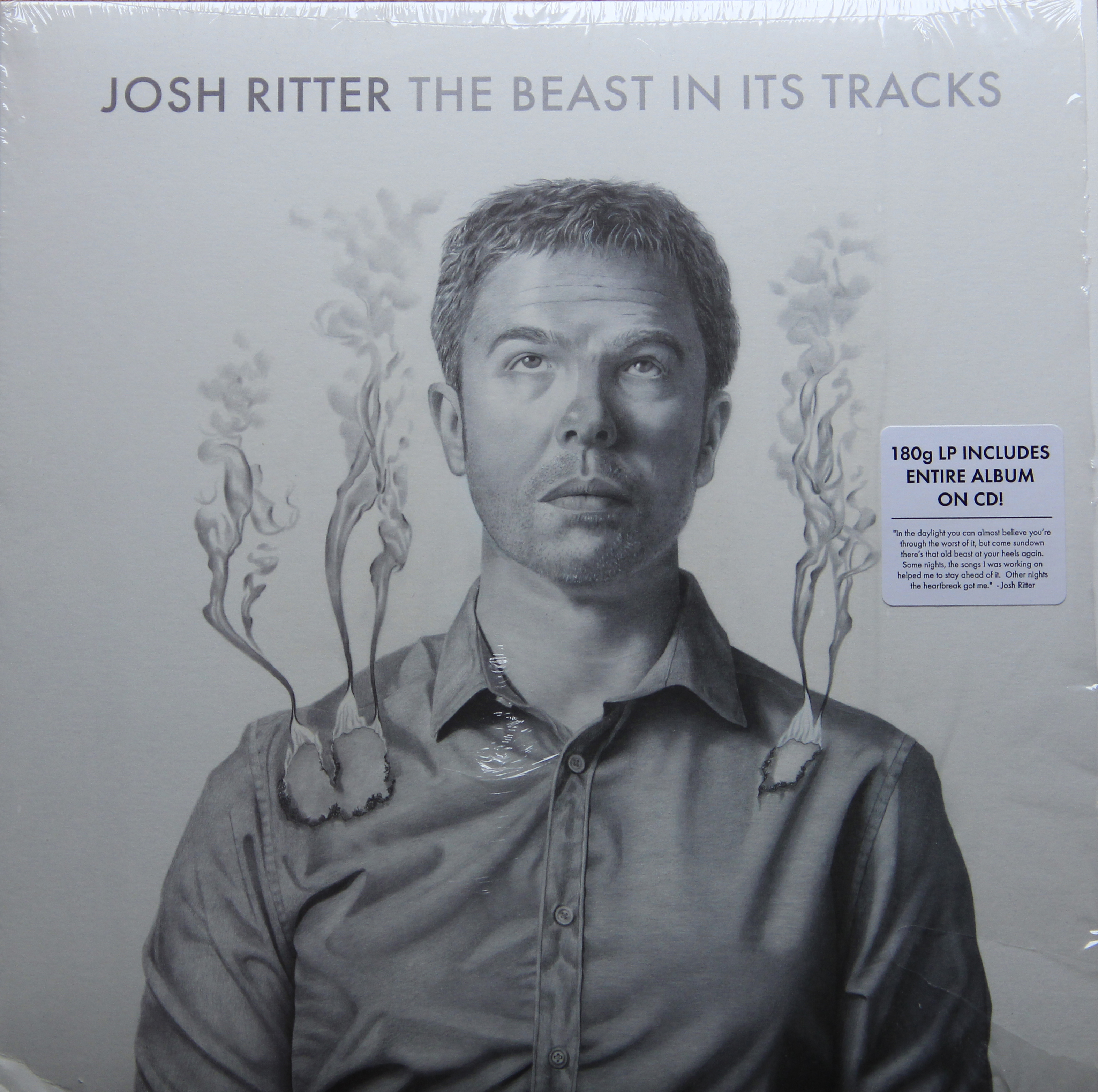
Josh Ritter : The Beast In Its Tracks
(2013 Pytheas Recordings/YepRoc Records)
Josh Ritter’s return after the lushly produced and arranged So Runs The World Away from 2010 is a much more restrained affair, featuring the usual bunch of talented musicians, nowadays known as The Royal City Band. As it is a break-up album, written and recorded after his marriage with fellow singer/songwriter Dawn Landes fell apart, it’s supposed to sound much sadder or more depressed than The Beast In Its Tracks actually does.
Yes, the arrangements are a quite stripped down and many of the songs are slow – but despite the lyrics reflecting the theme of a break up they don’t really sound all that melancholic. Take Nightmares for example – it’s a splendid song with a lovely tune and some fine solo acoustic guitar work by Josh Ritter himself augmented by a bit of keyboard and a bass guitar. What I always liked a lot about Josh Ritter is his voice, at once sounding resonant and full as well as neutral, with none of the extreme characteristics of people such as Bruce Springsteen or Tom Waits.
The album starts with the (very short) acoustic guitar/vocal song Third Arm, which nicely fades into second song Evil Eye, like almost all songs on The Beast… dominated by an acoustic guitar and a great tune. Next song A Certain Light is probably my fave song on the album, one of the loveliest – in a bittersweet kind of way – songs I heard in a long time, the lyrics telling about a new love he found, but as ‘she only looks like you in a certain kind of light’ implies, he’s still thinking about the love he lost a great deal.
Hopeful is probably the only song on here I don’t quite like too much, although it’s pleasant enough on its own right – but it’s just not AS good as the other songs. New Lover is one of the most fully arranged songs (together with Joy To You Baby and Hopeful) in a conventional Folk-Pop/Rock sense, with proper drums and intertwined guitar lines almost giving the song a nice Ambient-ish feel. I also love the last line ‘… but if you’re sad and lonely and you got nobody true I’d be lying if I said that didn’t make me happy too’.
Heart’s Ease features no less than four guitars all played rather delicately, so it’s by no means a rock-song. In Your Arms Again is maybe the most folky-sounding song on the album, slightly up-tempo with a light, airy feel to it. Maybe even more of a fave of mine than A Certain Light is The Appleblossom Rag, albeit in a very different way. It’s just a quiet song with just an acoustic guitar, Ritter’s voice and some kind of background noise, according to the liner-notes ‘gossip’, but actually more sounding like noise made in a kitchen, with rattling cups and such. I could listen to it for ages (I do that, actually). Afterwards, things get a tad more lively, starting with Bonfire, again a slightly folky, acoustic song, but more up-tempo and with equipped with a gorgeous tune.
Next track In Your Arms Again is as muck Rock as it gets on The Beast In Its Tracks, featuring almost a full drum set, although it’s only a bass and a snare drum (if I am not mistaken) and some background vocals giving it a rather full sound, compared to most of the other tracks on here. Next to last song Joy To You Baby is a summery, laid-back Folk-Pop tune and album closer Lights might be the most obviously melancholic track on the album.
As I mentioned, the direction is a bit of a surprise after So the World Runs Away, but nevertheless The Beast In Its Tracks is once again a fully convincing album by one of the best of the current young-ish crop of songwriters, and one I while most definitely be enjoying for ages.
My most recent discovery:
Check out their bandcamp here:
http://lastgoodtooth.bandcamp.com/
Or their facebook:
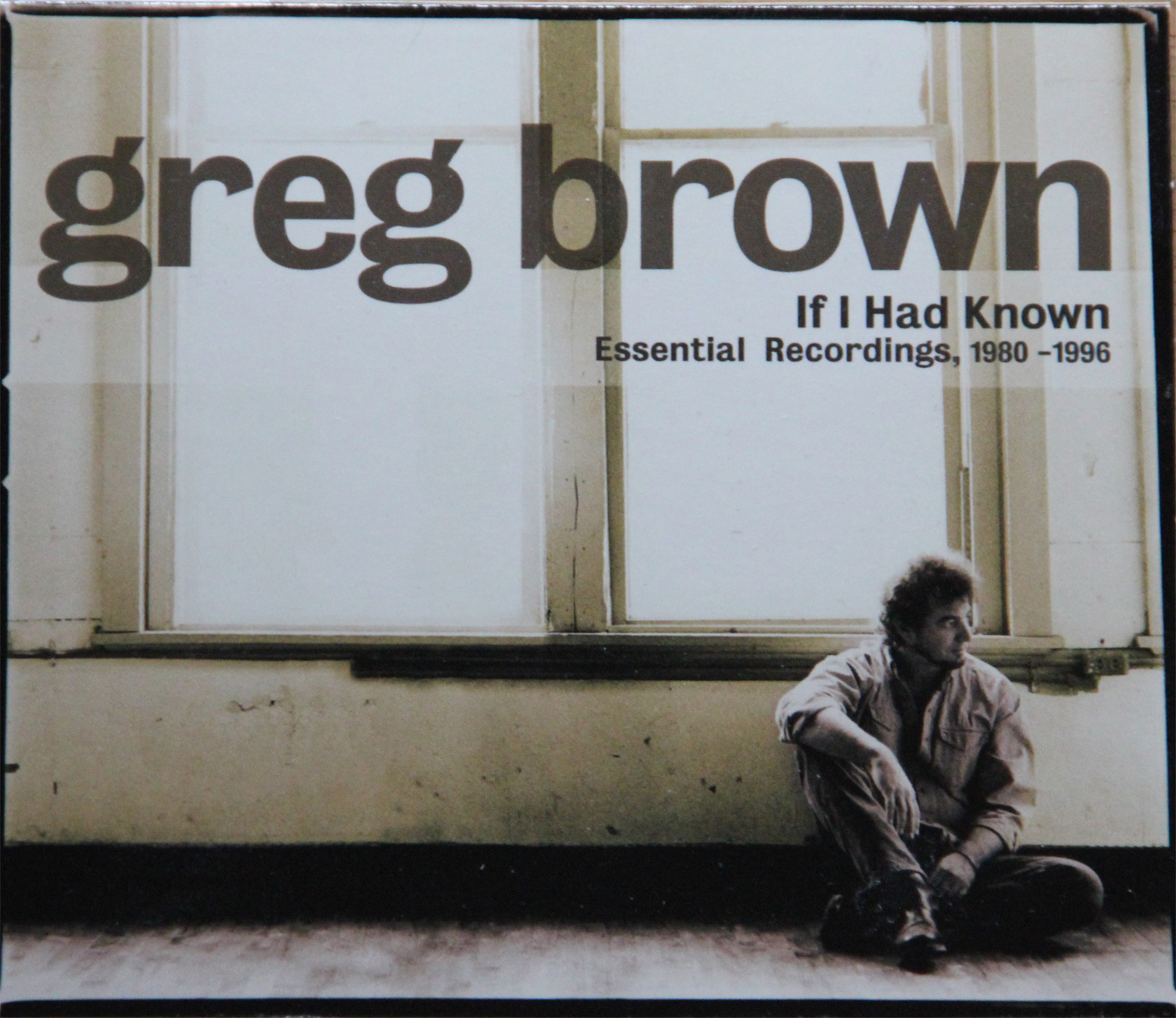
(2003 Red House Records)
Greg Brown (b. 1949) has been releasing records for a very long time (his first album Hacklebarney was released in 1974), how I managed to miss all of his (most probably) fine records all those years is a mystery to me, but better late than never, as they say.
When I finally made up my mind to buy one of his CD’s after paying his home state Iowa a visit in March of 2013, I stumbled upon this collection. Being a visually oriented person it didn’t take much convincing to buy the CD/DVD combo, containing the 1993 documentary, Hacklebarney Tunes The Music Of Greg Brown. So when it arrived in the mail, watching the 46-minute DVD was pretty much the first thing I did after opening the package. Having watched it a few times since, it still fascinates me as much as it did the first time I watched it. Sure, the visuals feel a little bit dated, having been filmed in the early 1990’s/late 1980’s, and the clothes being worn by the people shown in the film are slightly cringe worthy, (I’m not trying to make fun of anybody here, I, like mostly likely you reading this, wore the same styles back then, regrettably).
But what is shown and especially to be heard here, is anything but. I can’t really think of a documentary about a musician that inspired and enthralled me half as much as Hacklebarney Tunes (I am thinking about the very boring one about Gram Parsons and the rather touching one about Townes Van Zandt which I would very much recommend to anybody reading this, but I can’t remember the title, sorry) does.
It shows first and foremost a first-rate singer/songwriter well versed in a number of styles, all firmly within the Folk/Roots music field, with Folk being the most prominent, but unsurprisingly for somebody that has released a lot of records (his Wikipedia page lists about 25), there also have been other styles creeping into his recordings (as far as I can tell at this point in rather moderate doses though). It also shows a person being firmly rooted in his native Midwest/Iowa and seemingly at ease with his place in the world and his musical career (at one point sitting in his car on the way to go fishing he states ‚I’ve got so low ambition nowadays, it’s amazing to me’), there’s none of the depression of the likes of T. van Zandt on show, and no self-destruction in evidence – which I like a lot (although his is certainly no happy-go-lucky music and is thematically often quite serious).
Being produced by the University Of Iowa it starts of with some nice shots of the Southern Iowa countryside accompanied by a splendid version of Folk standard Pretty Boy Floyd with him, Bo Ramsey on guitar and a bass player, (an equally excellent version of Hank Williams’ Lost Highway from the same session can be seen later in the film).
His dad being a minister, the family moved quite a few times in the Midwest in Greg’s childhood and youth (as being recounted by his dad in the film). When he grew up he (like a lot of people) left to live in places away from his roots, but his love for the areas he grew up in is obvious as is the respect and love for his family. There’s a sequence of the older generation of his family and including his uncle Roscoe Brown (who’s interviewed in the film too), making music together in a living room with (what I believe to be) his grandma on the pump-organ and his granddad on the banjo, Roscoe Brown on the guitar and a fiddle player – very old-timey and lovely. Apparently he bought his grandparents farm around the time the documentary was filmed, although he seems to be living in Iowa City now with his second wife, fellow singer-songwriter Iris Dement.
Interviewed too is his childhood-friend Jimmy Chapman, telling the story of the catch they did in Earlville, Iowa’s Plum Creek while out fishing, told about in the compilation’s title-song If I Had Known. Also shown are some of the various places in Iowa he lived in growing up, small, rural farming towns with all their attendant problems, a theme recurring in a number of his songs. Ample room is given to various live versions of his songs – indicative of his recording style is perhaps the fact that these live versions often don’t vary all that greatly from the recorded versions that can be heard on the CD, (with the exception of Canned Goods which I like better in the faster and more stripped-down version in the film). Evidently he’s very entertaining live (haven’t seen him playing live, sadly), just note the live rendition of Poor Back Slider (from 1992’s Down In There) about guys trying to stay away from booze after visiting church – but ending up drinking even harder after a couple of months abstinence.
I also love the scene where standard Will The Circle Be Unbroken is sung by a church congregation – a true insight into, what I as a European at least, believe to be small town religious US-American life. As mentioned before, the struggle of people living in these small towns face is a theme of many of his songs, for example what is at the moment, my favorite of his songs Our Little Tow’ (from One More Goodnight Kiss) which can be heard here interspersed with photos from Earlville, IA (where his dad was a minister at one point). It’s a simply arranged song with just his deep, resonant voice and an delicately strummed acoustic guitar – all he needs in fact to stun you/me – very beautiful, if troubled, you simply cannot make Folk music any better than this.
Our Little Town is also featured on the 17 track CD. Unsurprisingly the songs on the CD vary quite a bit stylistically and one or two of them don’t work that well in my opinion, especially arrangement-wise, for example Good Morning Coffee (although the unusual pan pipes are not without a certain charm), and I am not too fond on the clarinet in Downtown either, a quite dark song in theme and sound also featured on the DVD in an acoustic guitar and harmonica version which I prefer, mainly for the haunting harmonica.
But the songs to be loved are by far in the majority, starting with the compilation’s title tune If I Had Known. Another highlight for me is Ella Mae an acoustic-guitar-and-voice-only live recording from 1982, originally released on the One Night album (1983), it’s an ode to his grandmother and not one bit mushy or overly sentimental – it’s honest and all the better for it. Canned Goods is bemoaning the fact that said canned goods haven’t got the sunshine in them like his grandma’s used to have – it certainly IS sentimental (and maybe arranged a tad too sweetly for my taste) but I love it nevertheless.
Laughing River (which can also be heard in the documentary in a scene where we see Greg Brown fishing) is another song much to my taste – folky, slightly up-tempo and showing Greg Brown at his best. The song is dealing with an artist longing for a place after spending a long time on the road – so it is tying in nicely with the documentary and one can assume is rather more autobiographic. As is clear for a Brown-novice like myself from watching Hacklebarney Tunes, he can make almost any song work with only his voice and acoustic guitar (which is of course a sure sign of any exceptionally talented singer/songwriter)
Worrisome Years is probably the most pessimistic song on the compilation, about a guy living in a small town, clearly not happy with his life and in some sort of economic tight spot ‚ …can you please tell me when does the good part start?’ clearly he’s run out of options ‚I think about leaving, but where would I go? How would I get there? I don’t know…’. Actually it doesn’t really sound that depressed, it’s a rather lovely folk-tune with a beautiful fiddle and backing vocals by Shawn Colvin.
I also like The Train Carrying Jimmy Rodgers Home a lot, it’s an old-timey Country tune with the sound mimicking that of Rodger’s era and of course featuring some yodeling – good fun. Spring Wind is amazing too – an acoustic guitar, some wonderful background vocals, a little bit of bass and harmonica and understated yet highly effective percussion and a gorgeous tune. The Poet Game is another song I have to mention, the thoughtful, intelligent lyrics recalling various people and situations in his life, both sad (a good friend he doesn’t talk to him anymore) and nice (a particularly happy time with a girlfriend) coupled with a melancholic melody and a lovely electric lead guitar by Bo Ramsey.
Where Is Maria is only very slightly marred by a in my opinion somewhat inelegant chorus, but otherwise a very fine, understated, acoustic Folk song too. Boomtown is the one track on here standing apart quite clearly stylistically from the rest, being a sort of all-electric and slightly bluesy up-tempo R’n’R/Pop song, I like it very much, especially the oh-so-true lyrics. The two last tracks on the compilation Two Little Feet and Driftless do round up the album rather nicely, the first one a midtempo Folk track and the album closer another melancholic song with Bo Ramsey on both electric and a Weissenborn lap guitar – Roots music at its best.
Now the only question left to answer is which Greg Brown albums to get next first. I guess I will either be going for The Poet Game or One More Goodnight Kiss (mainly because it’s got Our Little Town on it), well, most probably both.
 Back Road Bound