Rachel Ries : Laurel Lake EP

The first time I ever heard of Rachel Ries was spotting this poster in late September in a shop window in Fairfield, Iowa, announcing here show there a few days later.

Rachel Ries show poster

Unfortunately I couldn’t hang around to go and catch that show as I had to continue my travels, so I decided to check her out later that evening in my motel room on the internet. I quickly found her bandcamp page and discovered the Laurel Lake EP. I immediately liked what I heard (a lot), especially Letting You In, which took hold of my heart immediately. It took me until last week to finally get around to buying the EP and now I am sad I didn’t discover her fine work earlier, when I would have had the chance to buy one of the 417 CD’s with handsewn covers, so now I am left with a considerably less nice burned CD, oh well.

The music however does make amends for that somewhat. It’s excellent stuff from start to finish. The songs on the EP were played and recorded alone by Rachel Ries in a house next to Laurel Lake in Tennessee and the EP was originally released in early 2012. It starts with I’ve Forgiven Time of which I am especially fond of the accordion/acoustic guitar arrangement and her vocals are shown at their most expressive (on this EP anyway). Holiest Day might be my favourite song on the EP at the moment, a quiet, gentle song with reflective lyrics and a mood that could almost be described as pastoral, it’s utterly lovely. As mentioned above, Letting You In was the first song of the EP I loved – and I still very much do, it’s possibly the most upbeat and cute song (at least musically) on here, starting off with a single keyboard/electric piano accompaniment and then the build-up from a clean to a mildly distorted electric guitar. The lyrics on the other hand are making clear that she’s not exactly a happy camper, describing feelings of guilt and regret  ‘… I know I am to blame, I left my bike in the rain and snow, through seasons I watch it rust and fade, I know I am to blame…’. Top song, that.

Next song Willow sees her straying on slightly darker ground, the stark, bleak lyrics only increasing the song’s dramatic atmosphere – all in a low-key way of course, no post-rock crescendos to be found on here of course. You Can Go is even more downbeat in mood and theme – from the first time I heard it I had to think about some of my feelings during the slow death of my mother a few years ago, although I may be misinterpreting the lyrics which seem to be about letting somebody go you feel close to. It’s haunting, but all the better for it.

Standing Still brings this 22minute EP to a rather conciliatory close, with a mellow, sunny feeling – although the lyrics feature tornadoes.

I am very glad I stumbled upon this poster, who knows if I would have ever heard about this extraordinary new(ish, she has released a few albums in her career) voice in the Alternative Folk-Rock scene otherwise. Her, undoubtedly equally fine, new album Ghost Of A Gardener will be released on February 18, 2014, and I guess you will be able to find a review of it on here then. In the meantime, if this sounds like the kind of music you are interested in, do yourself a favor and head over to Rachel’s Bandcamp page http://rachelries.bandcamp.com and check out this gem of an EP full of homemade charm.

For more information check out her website at http://www.rachelries.com
Dave Carter & Tracy Grammer : Seven Is The Number

Dave Carter & Tracy Grammer : Seven Is The Number

(2006 Tracy Grammer)

I hadn’t heard about Dave Carter and Tracy Grammer at all until a few weeks ago, when the album was recommended to me by iTunes (of all things, oh well, at least Apple is good for something). As (to my knowledge) it isn’t available on CD anymore, I had to make do with downloading it, which I normally try to avoid if at all possible as I greatly prefer CD’s/LP’s, old-fashioned as I am. They were only active together from 1998 up to his death at the too-early age of 49 back in 2002, but Tracy Grammer released Seven is The Number after his death and has by now found a home at Red House Records, as always one of the finest purveyors of fine Folk albums so that is a nice fit. In US American Folk circles they achieved quite a bit of renown and went on tour with John Baez in 2002 – but all of that hadn’t reached me, but better late than never.

If you, like I was, are new to their music, the album opener and title track is a good pointer to what you can expect, both lyrically and musically. Instead of some dumb 666 Satan crap as you find on stupid rock albums here seven is the number for mankind with all its weak and strong points that clearly was/is of great concern to them. I am not sure of there’s some direct lyrical connection to some religious or spiritual belief or work, from what I read on their Wikipedia page Dave Carter was very much influenced by spiritual and mystical works, so that might be the case. The track is also rather short, and therefore almost seems like a statement of intent to me.

The sound throughout the album is airy and light, (which isn’t meant in a derogatory way at all) and dominated by Carter’s soft, gentle voice, with him playing the guitar and doing most of the lead vocals with Tracy Grammer mainly playing the violin – very fine indeed, as on, what is possibly the most melancholic song on the album, Red (Elegy), although a certain downbeat, sad feeling is evident on most of the songs on the album. Pretty much the only exception being the Hillbilly sounds of Texas Underground, a song possibly not meant to be taken too seriously, about a daytime nightmare, the devil and ‘… a smokin’ little band with a Country sound…’, done in the Carter/Grammer way as Carter most definitely didn’t possess any of Steve Earle’s raucous tough guy image. With regards to the possible involvement of other musicians I can’t really be certain, as I haven’t got a booklet and so am short on more background information, but there’s various other instruments to be heard, such as the mandolin on Gas Station Girl.

Instantly my favorite track became The Promised Land (it also went straight onto my Desert Island Playlist). It’s slightly more uptempo than most of the other songs on the album and a tune that found its way straight into my heart and refuses to get out. That haunting organ in the background is just too beautiful. Lyrically, it’s touching story about people on the fringes of the American society ‘I’m just doing what I do best, running with the devil and the dispossessed, waiting on a mission trying to make a plan, chasing my angel through the promised land’. The lovely following Hey Tonya is a tad more relaxed and also permeated with a touch of sadness. Gas Station Girl was actually the first song I heard of theirs, I couldn’t resist checking out a song with a title like that, could I? Glad I did though, as it’s a excellent, relaxed Country waltz, complete with mandolin, lyrics about long interstate drives and ‘the lips of a gas station girl’ – (classic theme, isn’t it).

Words fail me how to adequately describe the beauty of next track Long Black Road Into Tulsa Town, it’s unremarkable enough stylistically, just another slow Folk ballad, but that chorus is just heavenly, full of emotion, meaning and, for me at least, it’s impossible to be utterly captivated by lines like ‘… states of misery, states of grace, trouble and joy on a young man’s face, Swing Low Sweet Chariot, take me down that long black road into Tulsa Town…’. Wonderful.

Working For Jesus is a gorgeous tune too, it’s about a couple probably not looking eye to eye when it comes to the religious beliefs. Gun Metal Eyes is yet another song made that good by the story being told about an Indian meeting his fate in a confrontation with a company of loggers and the police – very poetic from start to finish and a new spin on the old story of confrontation between white people and Native Indians, ending as you would expect.

One doesn’t have to think too hard about who Carter and Grammer’s sympathize with, and it’s also got a nice Southwestern touch which is very well suited to the song’s theme. The album closes with Sarah Turn ‘Round of which I can’t say much more than that it’s beautiful, it sounds rather optimistic and sunny, in contrast to most other songs on Seven is The Number.

As I said before, the album isn’t exactly easy to come by, but everybody into music steeped in 60’s Folk traditions (I am more than once reminded of Arlo Guthrie’s work), should definitely check this very fine album out. Let Dave Carter and Tracy Grammer calm your soul and make your day a better one – at least for the 47 minutes Seven Is the Number lasts and most probably even longer than that.

Greg Brown : Freak Flag (Video)

In preparation for my upcoming trip to Nebraska and Iowa which starts tomorrow morning I am posting this video of (one of my) favorite tracks from Greg Brown’s last studio album to date ‘Freak Flag’. Needless to say perhaps that I like it a lot, and I’ve been meaning to write a review and post it on here, but I didn’t have the time to finish it. This video shows Greg Brown and Bo Ramsey in fine form, and I am happy to be able to say that I plan to go and see their show in Ames on the 27th if everything is going according to plan. Should be excellent.


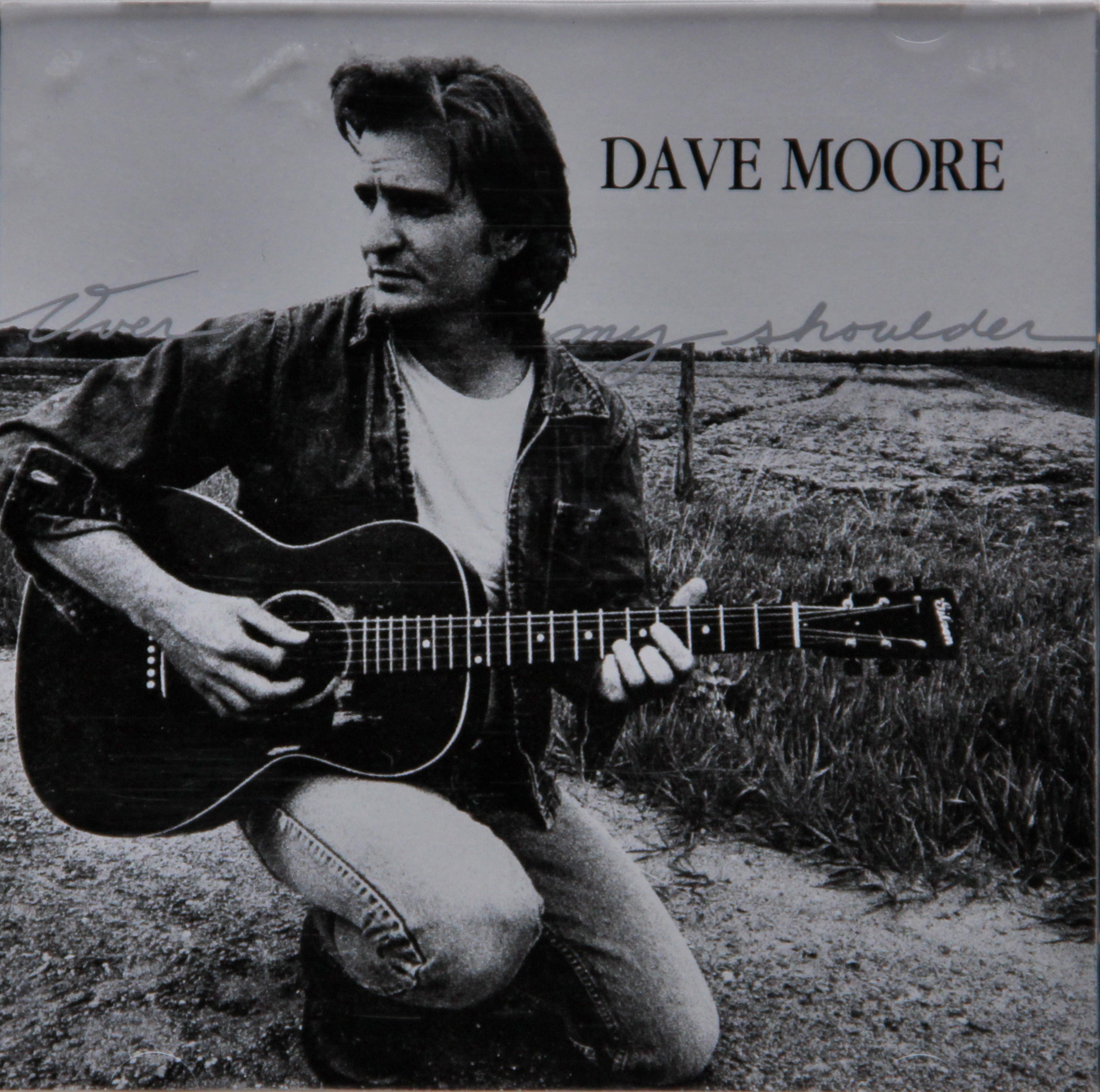
Dave Moore : Over My Shoulder

D_Moore_Over

Dave Moore : Over My Shoulder

(Red House Records, 1990)

I recently reviewed Dave Moore’s last album to date Breaking Down To 3 on my bog (check it out here). In comparison with that album on here it’s showcasing a broader variety of musical influences, mainly stemming from his experiences and the time he spent in various countries in Middle and South America. This time clearly left a lasting influence on him and the music on Over My Shoulder, whereas on Breaking Down… these are not really to be heard (I am not familiar yet with his first record Jukejoints and Cantinas form 1984 but judging from the album’s title these influences most probably are on there too).

These South/Middle American and TexMex influences are prevailing on a number of tracks, most notably on Open Your Heart (Abre El Corazon) which seems to have been written/amended by Mexican artist Manuel Guerrero and is based on Buck Owens’ Open Up Your Heart (or the other way around) and El Golfo written by Lolo Cavazos, which is the most authentic Mexican tune performed on here. The song The Mexican Highway is the track bridging these influences (it’s one of a number of songs where Moore also shines on the button accordion) with the Singer-Songwriter, Folk and Blues influences to very fine effect and is one of the melodic highlights on here.

The album starts off though with a track perhaps the clearest indication of what Dave Moore is all about, an immensely gifted acoustic guitar player strongly influenced by Folk-Blues artists the likes of Mississippi John Hurt (who is name-checked on Over My Shoulder) and a warm, rich voice. Just A Dog is a slightly up-tempo song, with some outstanding guitar work, a fiddle providing some memorable sounds and Moore’s expressive vocals (he howls like a dog a number of times). A great opener.

Bukka White’s classic Fixin’ To Die, perhaps most famous in Bob Dylan’s version (to me at least) is given the Dave Moore makeover  – I have to say I like it better than Dylan’s version – and you don’t often hear me saying something to that effect when it comes to Dylan’s early work. I very much like the brilliant slide guitar and harmonica on here.

God Moves On The Water (by Blind Willie Johnson) is updated here very convincingly. I have to admit that I am not familiar with the original version, but Moore’s version is affecting and quietly beautiful, with the Peter Ostroushko’s lovely fiddle sounding very wonderful indeed. The afore-mentioned El Golfo is the only instrumental on here, although it’s maybe a tad too traditional for my taste, but that’s just me, I am far from an expert on this kind of music, my only experiences with it are pretty much from Los Lobos and Calexico records, so don’t mind me.

The next two tracks A Little Hey Dad and Half My Life are a bit more familiar stylistically, both being excellent acoustic Singer/Songwriter/Folk songs, the first one featuring a highly original and brilliant vocal arrangement and Moore’s trademark harmonica which I love a lot (not just on this track, but throughout his work). Half My Life sounds very much like an Old Time Country tune, complete with Western fiddle and saloon piano – it’s a lot of fun to listen to. The tongue-in-cheek Waitresses is a catchy little Folk-Blues ditty holding the flag for the working class high, which is always endearing to me. The Third Candle I Burnt Tonight is another sparsely arranged, gentle ballad on which I especially love Chris Weygand’s standup bass, it’s understated, tasteful and the song is all the better because of that.

The best track on here is the title track, tucked away right at the end of the album. There’s actually an even better version than this available, which I included below (it’s a live recording from The Mill in Iowa City with only Moore and a gorgeous violin by Al Murphy). But the version on here is brilliant too, and as a song it may just the best song Dave Moore has ever written, it definitely is one of my favorites.

Listening to these two records, it’s clear to me that Dave Moore does belong in there with the best of his like and in my opinion it’s very unfortunate and unjustified that he is not as highly regarded or well-known as some of the other Singer/Songwriters and musicians of his generation. I wish he would release another album.

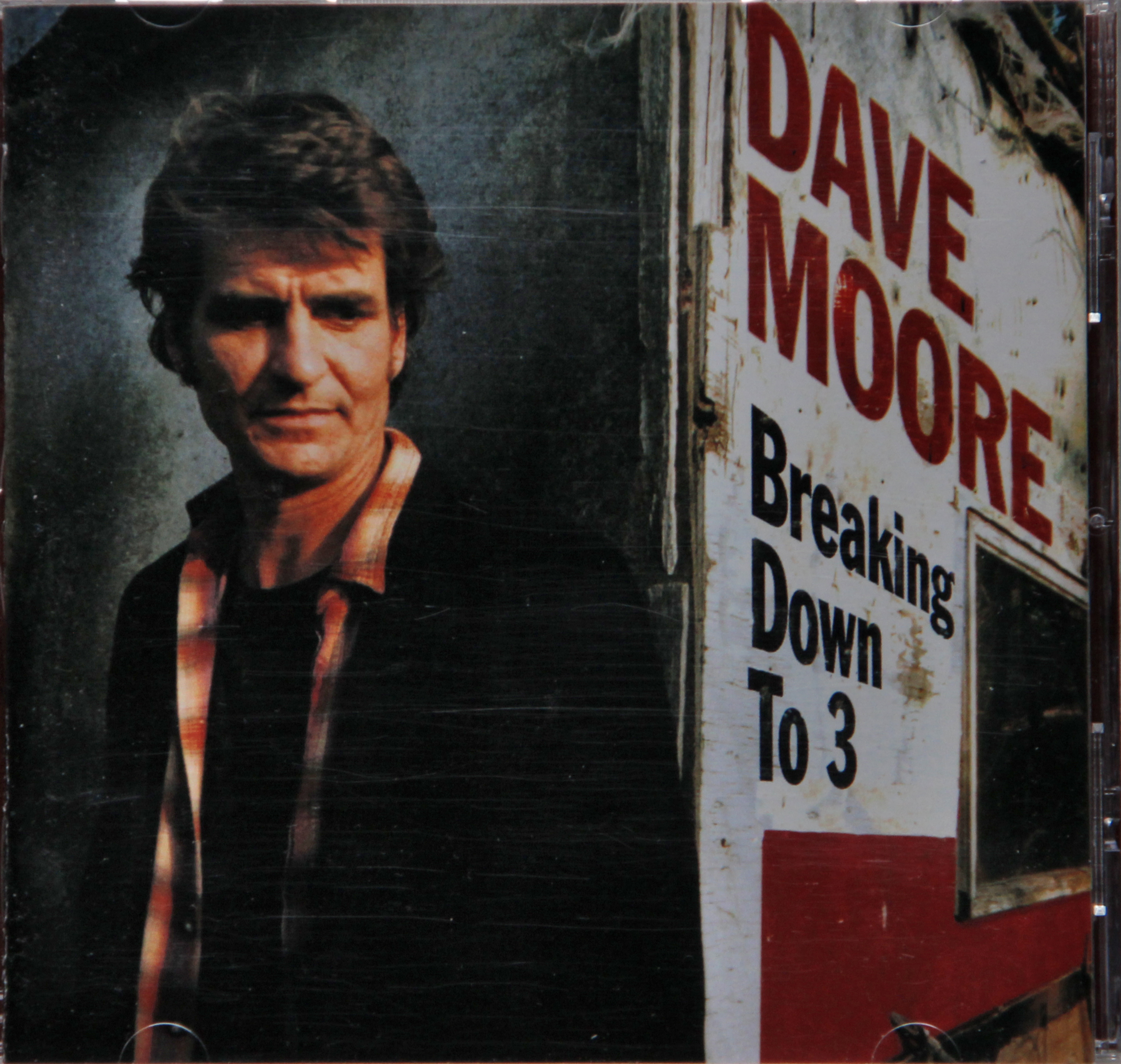
Dave Moore : Breaking Down To 3

Dave Moore Breaking Down To 3 cover

Dave Moore : Breaking Down To 3

(Red House Records, 1999)

To state that Iowa Singer/Songrwiter Dave Moore has kept a low profile would be something of an understatement and he certainly can’t be considered to be prolific when it comes to releasing records – 3 albums from 1984 to the present day isn’t a lot. Which is an absolute shame, if you ask me. I first became aware of Dave Moore watching the Greg Brown documentary Hacklebarney Tunes that, with its accompanying CD If I Had Known, acted as a catalyst for me to discover Bo Ramsey as well (see my review of his album Fragile here…), not to mention Red House Records, which Greg Brown founded in 1981 and which I only knew by name before.


Finding information about Dave Moore hasn’t been easy, he hasn’t even got a Wikipedia entry or example, so there was more or less only the short biography on him on the Red House Records website (http://www.redhouserecords.com/Moore.html). But fortunately there’s YouTube and there are quite a few videos of him playing in small Folk clubs, festivals etc. to be found.  You can also get all three of his albums over at Amazon (if, like me, you live in an area without any record stores you could hope to find albums like his). However, I liked what I heard on these clips immediately, they were mostly solo acoustic recordings as well as a few that show him accompanied by other musicians. I soon discovered that he is an extremely talented (mainly acoustic) guitar player and ace songwriter. He’s also playing harmonica and accordion (which he learned from TexMex/Norteno legend Fred Zimmerle).

The first thing I have to say about Breaking Down…  is that it sounds absolutely stunning. I have seldom heard an album produced, mixed and mastered as well as this, the sound is crystal clear and airy while at the same time substantial and muscular (in a stripped down way – no loud and hard electric guitar riffs or anything like that). You can hear each and every instrumental track recorded with stunning clarity and the same goes for his rich, full voice. But having bought a few other records released on Red House Records recently I am slowly beginning to suspect that their records are usually produced to a very high sound standard, which of course is a distinct plus for me, I am very fond of good-sounding records.

His music is Singer/Songwriter fare straight out of the American Heartland, with just the right influences from Folk to Blues, Roots and TexMex, (though the latter is mainly the case on the Over My Shoulder album and not really on here). His characteristic harmonica sound is employed to very fine effect throughout the album, especially on tracks such as Down To The River and Big Fool For You. Coupled with Ramsey’s (who also shares the production credits with Moore) amazing guitar work (if you read my review of his album Fragile or Pieta Brown’s Mercury you will now how much I am into his style of guitar playing), the combination of the two could be described as a match made in heaven.

On here it’s especially Sharks Don’t Sleep and Midnight on which Ramsey shines. As usual he’s supplying just the right amount of ambience through his understated but highly effective, soulful and bluesy lead guitar. Midnight for me is the best song on here hands down – the bass guitar is going way down, it sends chills straight to your bones and it’s got great harmonica work too.  The image I have got in my head whenever I listen to Midnight is that of standing next to the train tracks late at night and having a freight train rumbling by a few feet away.

The other musicians of the small band accompanying him on the album don’t disappoint either, even if they stay in the background somewhat by Moore and Ramsey. David Zollo’s piano is augmenting Big Fool For You rather nicely and the use of an acoustic stand-up bass, as is the case on some tracks, is always a plus in my book. In the laid-back Big Drafty House a man is reminiscing back on his life of 20 years ago and the area he lived in at that time, sentimental perhaps, but a nice image nevertheless.

On the ballad Painting This Room Ramsey plays (what I believe is) a National resonator guitar, unsurprisingly, that’s sounding fabulous. Next track Let’s Take Our Time And Do It Right is a good-natured blues shuffle. The saddest song on here is All the Time In The World, an intensely personal, gentle ballad about a father taking to his deceased daughter, so it sounds appropriately melancholic.

But he can do upbeat, easygoing Blues/Folk-Pop songs as well, as tracks such as Big Fool For You or Mr. Music prove. The aforementioned Sharks Don’t Sleep is another highlight on the album. I have listened to it many times and still can’t figure out what the lyrics are about, but never mind, the music is utterly captivating, a mid-tempo song with a rather restrained musical backing and a moody atmosphere, and that Bo Ramsey guitar…

Album closer Down To The River is an unashamedly romantic song about a man, his woman and a dog escaping city life in their cabin by the river with a suitable lovely tune and a simple yet graceful Folk-Pop arrangement.

One of the overlooked gems in the Singer/Songwriter field of the past 15 years, that’s for sure.

3 videos by Dave Moore

I am currently in the middle of writing reviews of two records by Iowa’s Dave Moore (not to be confused with the Texas Christian music bloke of the same name) to post them on here. In the meantime, here are three videos recorded back in 2006 at an outdoor Festival in Iowa City to give you a taste of his excellent work. Keep your eyes open for the reviews to follow in the next few days.

Sharks Don’t Sleep (originally from his 1999 album Breaking Down To 3)

Coralville (not available on record as far as I’m aware) but it’s a great, humorous Folk-Blues number

Down To The River (also from Breaking Down To 3)